
It’s a Tuesday in mid-May. Twelve families are staying at a 100-site park. The pool is still covered, the camp store is closed, and the activities director doesn’t start for three weeks. The occupancy report shows midweek nights at 11%, and the first thought is obvious: our weekday rate is too high.
In most cases, that’s the wrong conclusion, and it’s one of the most common mistakes in campground occupancy management. Here’s why, and what to do instead.

Every Night Is a Different Product
Most approaches to campground booking and occupancy management come from the hotel world. If a night fills up, its price goes up next year. If it doesn’t, its price gets cut. That approach assumes every night is the same product.
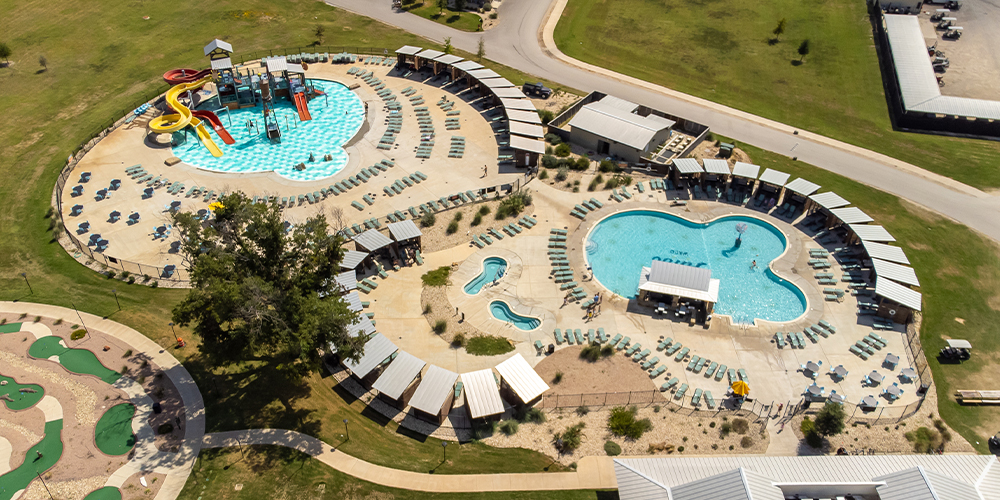
At a seasonal campground, every night is not the same product. A night at your park is a bundle: the site plus everything open around it. A Tuesday in May might include a site and a bathhouse. A Saturday in July includes the pool, the water park, a full activities schedule, and a snack bar open until nine. The site is the same, but the product is very different. The July version also costs much more to deliver.
So start with your amenity calendar instead of your occupancy report.
Step 1: Build Your Amenity Calendar
Write down, by date, what’s open:
- Pool and water park dates and hours
- Weeks your activities staff is working
- Camp store and food service hours
- When programming starts and stops
You already have this information. It’s in your hiring plan and in the hours posted on the store door. It just rarely gets to whoever sets the rates. When we provide campground occupancy management services, this calendar is one of the first things we ask for.

Step 2: Group Nights Into Rate Tiers
Once you write it out, your season usually falls into five or six groups of nights, from full operation down to pre-season nights with only the bathhouse open. Each group becomes a rate tier, and those tiers are the foundation of campground occupancy management at a seasonal park.
The rule is simple:
- The amenity calendar sets the tiers.
- The tiers set the base rates.
- Demand can push a night above its tier, but never below it.
A local festival or a big football weekend nearby is a good reason to charge more for a shoulder night. A slow week is not a reason to charge less than the product is worth.
The opposite mistake matters too. Don’t charge close to peak rates on a night when the pool is drained and nothing is staffed. Guests notice, and they’ll say so in reviews.
Why Midweek Discounts Usually Don’t Work
In campground booking and occupancy management, midweek discounts are one of the easiest ways to lose money without noticing. Back to that 100-site park. On a slow Tuesday, it’s at 40% occupancy at $150 a night. That’s 40 sites and $6,000.
The owner cuts the rate to $125, and bookings go up 15% to 46 sites. That sounds like a win until you do the math:
- 46 sites × $125 = $5,750
The park served six more families, cleaned six more sites, and made $250 less. It would need 48 sites, a 20% increase, just to break even. A $25 discount on a Tuesday rarely gets you there.
That’s because the family that booked at $125 would most likely have booked at $150 anyway, and the family that didn’t book still won’t. Price was never the problem. It’s a Tuesday, so parents are working and kids are in school.
Midweek occupancy is lower because there’s less demand, not because midweek guests care more about price. Those two problems look the same on an occupancy report, but they need opposite fixes.
To find out whether a discount worked, compare the discounted dates to the same dates in a year when you didn’t discount. Count only the bookings the discount actually brought in, not every booking that came in while it was running.
The Hidden Cost of Discounting
Every discount also teaches guests something. If the same night costs $150 in late June and $119 during a slow stretch in July, your base rate stops being a price and becomes an opening offer. Repeat guests catch on first.
It adds up fast. If the same 100-site park drops 20 slow midweek nights from $150 to $119 at 40% occupancy, it gives away $24,800 in one season. On top of that, next spring that $119 starts to look like the “real” price.
Keeping your rates consistent is called rate integrity. It’s one of the most overlooked parts of campground occupancy management, and it’s what gives you room to raise prices later.
Seasonal campgrounds have more pricing power than most owners realize. A hotel guest can cross the street to an identical room. A family choosing a campground is choosing a specific lake, a specific pool, and the same families they see every summer. Often there’s no real alternative nearby, hence why campground booking and occupancy management is crucial for a campground to thrive.

A July Tuesday Is Not a May Tuesday
That doesn’t mean every weekday should be priced low. This is where campground booking and occupancy management can go wrong in the other direction. In peak season, a Tuesday has nearly everything a Saturday does. The water park is open, the activities staff is working, and the store keeps full hours.
Price peak weekdays only slightly below weekends. Weekend demand is higher, but the product is almost the same. For retirees, families with young kids, and remote workers, a peak weekday may be the better trip: every amenity, shorter lines. Don’t price it like a May Tuesday.

Focus on the Nights That Carry Your Year
A park in the Northeast gets about fifteen real summer weekends between Memorial Day and Labor Day, and a few of them get rained out. Southern parks have longer seasons, but they also have slow stretches in extreme heat. Either way, a small number of nights carry the whole year, and you can’t make up for a badly priced July in October.
Those nights are your biggest opportunity. Holiday weekends, mid-July, and your signature event weekend are the nights to raise every year. If you’re still selling them out at the rate you charged three years ago, you’re leaving far more money on the table than any midweek promotion will bring in. When parks bring in campground occupancy management services, this is often where the biggest gains show up.
Holding your rates during slow weeks and raising them on peak nights are two sides of the same discipline.
“Why Not Just Open the Pool?”
It’s a fair question. If amenities make a night worth more, why not open them midweek in May?
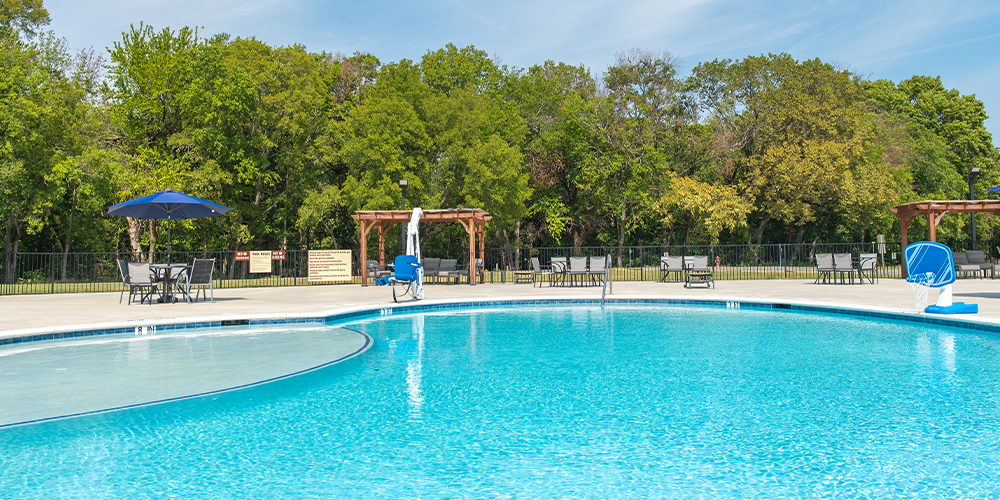
Because the math doesn’t work. A lifeguard, a pool attendant, and chemicals for four families cost more than those four families spend. Amenities are limited in the shoulder season because there aren’t enough guests, and there aren’t enough guests because it’s a shoulder-season weekday. That’s not a flaw. It’s how a seasonal business works, and good campground occupancy management works with that cycle instead of fighting it.

The Bottom Line
Start with your amenity calendar, not your occupancy report. The approach works anywhere, even though the dates change: a Texas park is in its shoulder season in March while a park in Maine is still under snow.
Campground booking and occupancy management is simpler than a slow weekday report makes it look. The real question isn’t what that Tuesday in May should cost. It’s what your Saturday in July is worth, and whether last season’s rates reflected that.
Northgate Resorts provides campground occupancy management services at seasonal parks from Texas to Maine. Reach out if you’re interested to see what we can do.