
Ask most campground owners where their revenue comes from, and you’ll hear the same answer every time: sites. Nightly rates, seasonal contracts, maybe a cabin or two. Food and beverage gets filed under “amenity,” the camp store selling firewood, novelty ice cream, and soda. A convenience, not a business.
That thinking leaves real money on the table.
Across our portfolio of nearly 40 parks, we’ve learned that food and beverage isn’t an afterthought bolted onto the front office. It’s a profit center, a guest-experience driver, and one of the few levers an owner can pull to grow revenue without adding a single site or raising a single rate. For owners actively pursuing campground expansion opportunities, or evaluating campground development solutions for an existing property, F&B (Food and Beverage) is often the fastest path to measurably better margins, with no new acreage required.
The catch is in two words: run well. Most campground F&B underperforms not because the demand isn’t there. Your guests are on vacation, hungry, and in no mood to drive 15 minutes to the nearest restaurant. The real issue is that the operation is managed like a snack bar instead of run like a business.
Here’s what actually moves the needle.
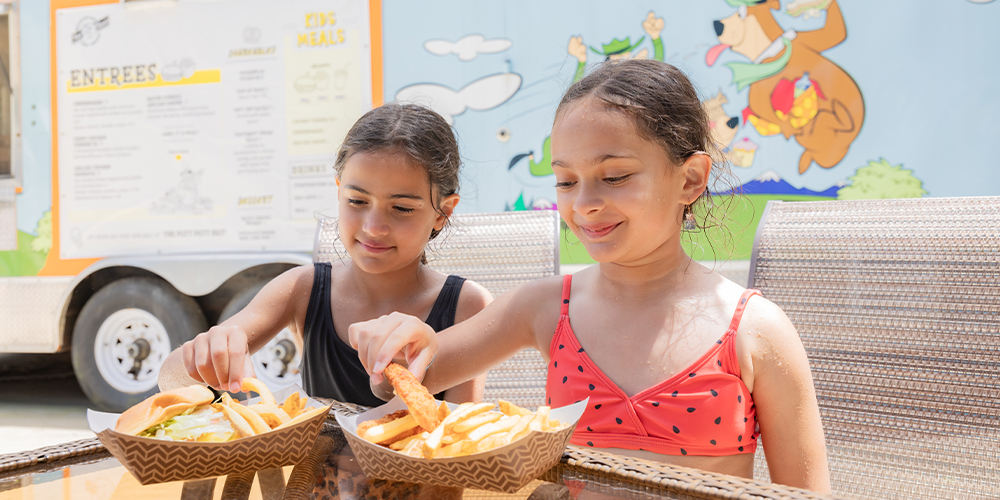
This Is Not a Restaurant. Stop Running It Like One.
The single biggest mistake operators make is importing restaurant thinking into a campground kitchen. Chef-driven menus, fresh-everything sourcing, scratch cooking, rotating specials, all the things that win in a neighborhood bistro are exactly the things that sink an outdoor-hospitality F&B operation.
Your context is fundamentally different. Guests are on vacation and want good food, served fast, so they can get back to the lake, the bikes, and the campfire. Your kitchen is staffed by seasonal, part-time, often first-time food-service workers. Storage is limited, conditions are variable, and volume swings hard with the season.
A program that ignores those realities will fight them all summer. A program designed around them will print money. The five principles below are crucial for a successful F&B program, and they’re the same discipline we bring as one of the top resort developers in the United States.
1. Speed Is a Feature, Not a Compromise
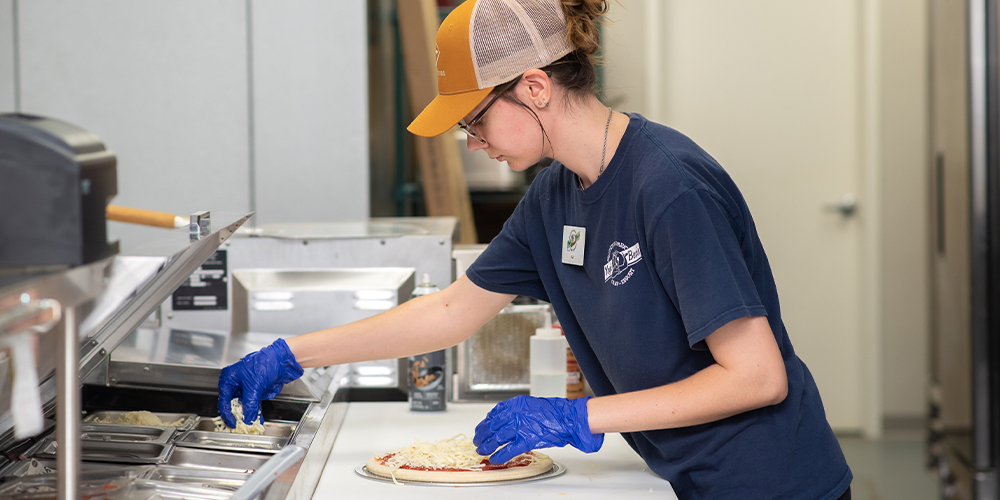
Every minute a guest spends waiting in line is a minute they’re not enjoying the vacation they paid for. Speed isn’t a nice-to-have, it’s a design constraint. Build the menu so most items come together in under five minutes, using simple, repeatable steps any team member can learn fast.
The practical test: if an item consistently jams up the line during peak hours, creates a bottleneck, or requires real culinary skill to execute, it doesn’t belong on the menu, no matter how good it tastes. Throughput is the product.
2. Engineer Out the Food-Safety Risk Before It Happens
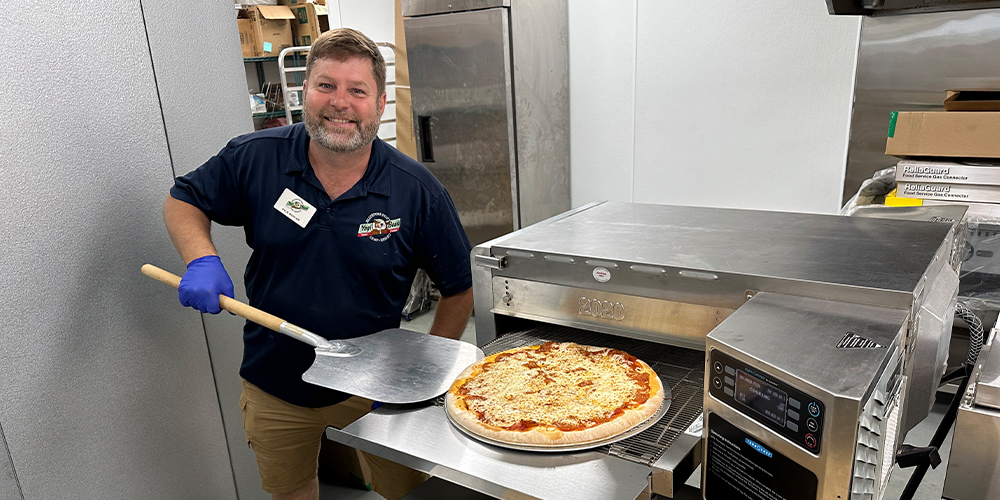
Outdoor kitchens run in heat, humidity, tight cold storage, and temporary staffing, a hard environment for raw proteins and delicate produce. The smart move is to engineer the risk out of the menu rather than manage it on the fly.
Lean on pre-cooked, frozen, and shelf-stable ingredients wherever it makes sense, and limit fresh items to high-turnover staples with manageable shelf life. This isn’t a shortcut, it’s a food-safety strategy. It means a team member with basic food-handler training can safely execute every item on the menu, and it dramatically simplifies compliance. Fewer raw, perishable, hard-to-handle ingredients means fewer ways for things to go wrong on a 95-degree Saturday.
3. Make Every Ingredient Earn Its Keep, Twice
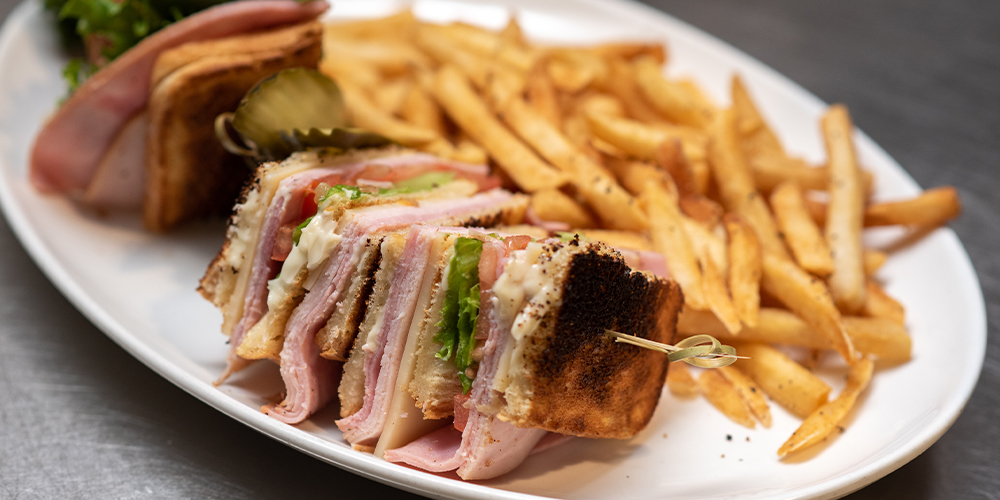
This is where the margin lives. On a well-built campground menu, every ingredient shows up in multiple items. One chicken breast can appear in the sandwich, the wrap, the salad, the quesadilla, the nachos, and the buffalo wrap. One protein, six menu items. The same shredded cheese covers quesadillas, wraps, salads, and nachos. One BBQ sauce serves wings, burgers, loaded fries, and a pulled-pork sandwich.
This cross-utilization is the quiet engine of profitability that top campground developers use. It keeps ingredient count low, simplifies ordering, slashes waste from specialty items used in only one dish, and reduces overall inventory. Before adding a menu item, ask: can I build this from ingredients I already stock? If a new item drags in two or three ingredients used nowhere else, it had better sell in serious volume, because every new ingredient adds ordering complexity, storage demand, and spoilage risk.
Less waste means lower food cost. Lower food cost means real margin, even at family-friendly price points. That’s the whole game.
4. Standardize so the Experience Doesn’t Depend on Who’s Working
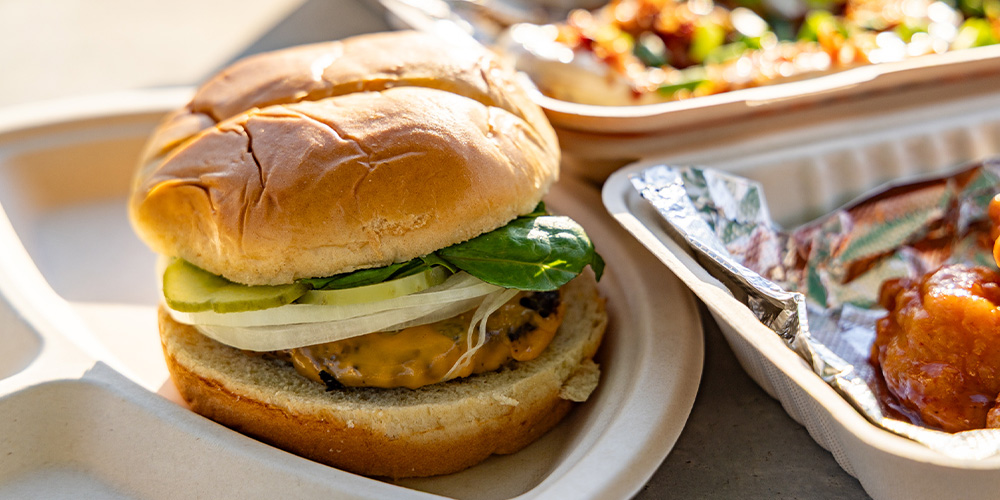
The funnel cake shouldn’t be great when your best employee is on shift and forgettable when they’re not. Consistency is what turns a one-time purchase into a vacation tradition, and traditions are where loyalty and repeat revenue live.
Standardization gets you there: the same core menu, the same recipes, the same portions, the same build steps, every time. Portioning done with scoops, cups, and counts, never “to taste.” A new hire who can read a recipe card and watch one demo should be able to make the item correctly. If they can’t, the recipe needs to be simpler, not the training longer. Complexity is the enemy of consistency at scale.
5. Price with Discipline, and Hold Your Menu Steady
Two habits separate the parks that profit from the ones that don’t.
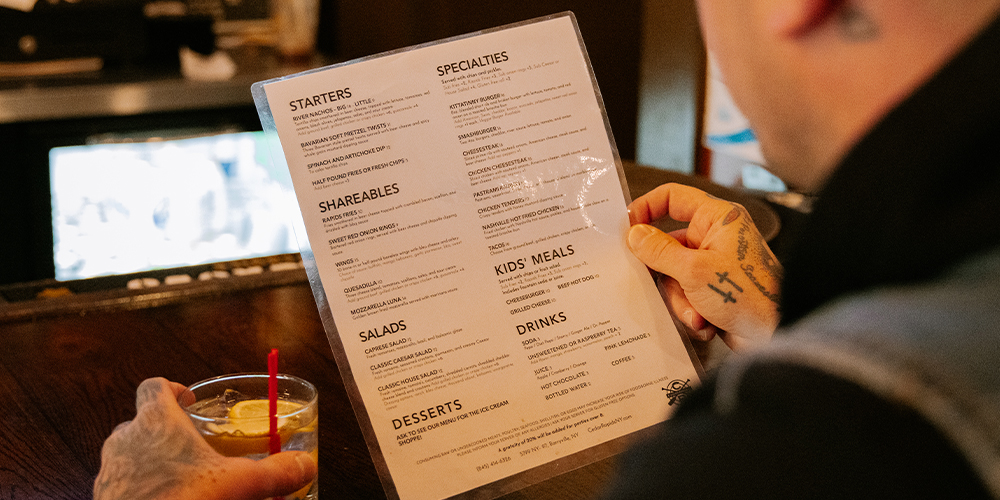
Price to a target, not to a feeling. Most underperforming operations price items to “seem fair” without ever checking actual food cost. Set a margin target, price every item against it, and treat baseline prices as a floor you build up from, never a number you quietly erode with discounts and one-off deals.
Resist the urge to fiddle with the menu mid-season. This is counterintuitive if you come from restaurants, where novelty drives repeat traffic. But campground guests are overwhelmingly one-time visitors within a season, so menu freshness doesn’t bring them back the way it would at a neighborhood spot. Meanwhile, every change carries a long tail of cost: inventory to run down, new items to source, storage to reset, staff to retrain, and every menu board, sign, and webpage to update. Once the menu is set for the season, leave it set. Change for a real reason, a genuine underperformer, a new equipment reality, a peak-to-shoulder transition, not because you’re bored with it.
Why This Is the Highest-Leverage Move on Your Property
Step back and look at what makes F&B different from almost every other growth lever available to an owner:
You already own the asset. No land to acquire, no sites to build, no major capital outlay. The kitchen, the staff, and the foot traffic are already there, which is exactly why so many owners exploring campground expansion solutions start here before they start pouring concrete.
Your guest is captive and willing. They’re on vacation, they don’t want to leave, and they came to relax and spend, not to cook. You are the path of least resistance, and convenience is a premium you’ve already earned.
It compounds the rest of your business. A great food experience doesn’t just generate F&B revenue. It lifts reviews, drives repeat bookings, and becomes part of why a family chooses your camping resort over the one down the road. Few things build loyalty like a kid’s favorite vacation memory being something they can only get at your place.
The Bottom Line
Food and beverage is the most underestimated revenue stream in outdoor hospitality, not because the opportunity is small, but because it’s almost always managed like an afterthought instead of run like a business.
The best campground operators in the United States aren’t the ones with the biggest kitchens or the fanciest menus. They’re the ones who designed the program around how a campground actually works: built for speed, engineered for safety, ruthless about cross-utilization, standardized for consistency, and disciplined on price. Do that, and the sleepy snack bar by the pool quietly becomes one of the most profitable square feet on your property.
It’s this same operating discipline, treating every square foot and every revenue stream as part of a designed system, that we bring to owners across the country who are weighing their next move, whether that’s optimizing an existing park or exploring new campground development opportunities altogether. As one of the top resort developers in the United States managing parks coast to coast, Northgate Resorts works with independent owners the way we work with our own portfolio: as third party campground developers who bring proven systems, not guesswork, to every property we touch. You can learn more about our services here.
Whether you’re comparing RV resort developers for a ground-up build or benchmarking against the top campground developers in the United States to see how your F&B program stacks up, the underlying lesson is the same. The revenue is already on your property. The only question is whether you’re going to manage it like it matters.